7 Best Warm Waterproof Dog Coats With Underbelly Protection
Affiliate Disclaimer: As an affiliate, we may earn a small commission when you make a purchase from any of the links on this page at no additional cost to you!
Last Updated on October 23, 2025
Cold weather soaks a dog’s underside first. The right coat stops splash, seals seams, and keeps movement free. This roundup highlights the 7 Best Warm Waterproof Dog Coats With Underbelly Protection so shoppers can compare underbelly coverage, insulation, taped seams, and harness access at a glance.
Expect quick picks by budget and body type, plus sizing guidance that prevents returns. The guide explains full-panel vs strap-style belly guards, trade-offs between warmth and mobility, and care tips to maintain DWR and waterproofing. Smart next step: measure chest, back length, and neck, then match those numbers to each coat’s belly panel and adjusters.
Search Intent
The user intent is commercial/transactional. Shoppers want to compare and buy warm, waterproof dog coats that include reliable underbelly protection for wet and cold walks. They focus on fit, materials, durability, and features that keep a dog dry and mobile during outdoor activity.
Decision-makers look for quick, practical comparisons and sizing guidance. They expect clear trade-offs between heavier insulation and freedom of movement. They also want cleaning instructions and return-policy considerations before purchase.
Compare and choose warm, waterproof dog coats that include reliable underbelly protection for wet and cold walks — buyers researching product options and fit before purchase
When comparing options, evaluate these core criteria:
- Waterproof shell — look for tightly woven nylon or polyester and taped seams to stop moisture.
- Insulation — synthetic fill dries faster than down and keeps warmth when wet.
- Underbelly coverage — a full-coverage panel or adjustable flap protects the chest and underside from puddles.
- Fit and sizing — measure chest/girth, back length, and neck. Allow room to layer and to move freely.
- Closure and harness access — choose coats with Velcro or snap closures and a harness/D-ring port.
- Mobility — test leg cut and trim to avoid chafing or restricted gait.
- Care and durability — check washing instructions and abrasion-resistant panels for rough use.
For dogs that travel frequently, buyers often pair a coat with other travel gear. See Essential dog travel tips and gear for road trips for complementary advice on packing and comfort.
CTA: measure the dog, note activity level, and compare specs and returns before purchasing. Prioritize taped seams and secure underbelly coverage for wet-weather reliability.
Top 7 recommended coats (quick comparison)
The table below summarizes the 7 Best Warm Waterproof Dog Coats With Underbelly Protection so readers can match features and fit at a glance.
- Best overall: Full-coverage shell, insulated liner, adjustable underbelly flap.
- Best budget: Lightweight waterproof shell, basic belly protection.
- Best for large/deep-chested dogs: Extended belly panel, wide girth adjusters.
- Best for small/long-backed breeds: Shorter back length, wrap-style underbelly.
- Best insulated for cold climates: High-loft fill with low bulk.
- Best for heavy rain: Taped seams and detachable hood.
- Best harness-friendly: Reinforced leash slot and D-ring access.
For readers preparing for travel or outdoor gear shopping, see essential dog travel tips and gear for road trips for complementary packing and sizing advice.
Best overall — pick and why (key features and ideal dog types)
The best overall coat balances weatherproofing, insulation, and fit. It uses a waterproof outer fabric with a DWR finish, a removable insulated liner, and a wide underbelly flap that fastens securely across the chest. Look for adjustable belly straps and multiple neck closures to prevent gaps and chafing. Reflective trim improves visibility on short winter days. Ideal dogs include mixed breeds, retrievers, and medium-to-large companions with standard toplines. The coat should allow shoulder freedom so the dog can walk without rubbing. Buyers should measure neck, chest, and back length and confirm harness access. For a gear-focused perspective that complements this pick, consult the best dog crates for car travel in 2023 — a comprehensive review.
Best budget option — who it suits and tradeoffs
The best budget coat delivers waterproofing and basic belly coverage at a low price. Expect a thin PU-coated shell, stitched rather than taped seams, and simpler fastenings such as Velcro or single buckles. These coats suit city dogs, short walks in light rain, and owners who need a spare or travel-ready option. Tradeoffs include less insulation, reduced durability, and seams that may let water in during heavy storms. For camping or low-cost travel setups that pair well with budget gear choices, see 9 tips for hammock camping with your dog. A practical CTA: buy one size up if between sizes, since budget materials compress and restrict movement more than premium fills.
Best for large/deep-chested dogs — fit and coverage details
Large and deep-chested dogs need coats with an extended underbelly panel and broad girth adjustability. Look for coats with dual buckle straps plus wide Velcro for fine tuning. A higher-cut neck helps prevent chafing at the shoulder and keeps the coat from sliding back. Reinforced belly fabric and shorter back-to-tail overlap prevent the coat from snagging when the dog sits. Measure the widest point of the chest and the distance from neck base to groin before choosing a size. For practical handling tips with big dogs, the article on 5 steps to safely lift a large dog into a car has complementary safety guidance.
Best for small/long-backed breeds — special underbelly design notes
Small, long-backed breeds such as Dachshunds and Corgis need coats that protect the full belly without constricting leg movement. Seek wrap-style underbelly panels that contour the elongated torso and fasten low to avoid riding up. Elasticized hems and shorter back lengths maintain coverage while letting the dog move naturally. Lightweight insulation preserves mobility. Avoid bulky collars or high shoulders that interfere with harnesses. For breed-size considerations when traveling or booking transport, refer to the dog breeds that fit under airplane seat guide, which helps visualize sizing constraints for small breeds.
Best insulated for cold climates — warmth vs bulk
Cold-weather coats should maximize warmth per ounce. Synthetic high-loft insulation (e.g., PrimaLoft-style) traps heat when wet and compresses less than cheap fills. Down offers excellent warmth-to-weight but loses loft when damp. The ideal coat pairs a thin, insulated liner with a low-bulk shell that preserves range of motion. Look for a removable liner so owners can swap layers across seasons. Pay attention to where insulation sits — concentrated over the back and chest but minimized at joints prevents stiffness. Check fill ratings and prefer coats with draft-blocking collars and adjustable hems to seal out wind without excess weight.
Best for heavy rain — seam-sealing and hood details
Rain-focused coats require fully seam-sealed construction and a waterproof rating on the fabric spec. Taped seams prevent water ingress where panels meet. A storm flap over the closure and a shaped, detachable hood keep the neck and head drier. Choose a coat with a slightly longer belly panel that channels water away from the chest. Drainage slits under the belly prevent water pooling. Quick-dry linings and a DWR finish help the coat shed moisture during extended exposure. For water-oriented gear and pool-safe fabric notes, see 10 refreshing puncture-proof dog pools.
Best harness-friendly option — harness access and safety features
Harness-friendly coats provide a reinforced leash/D-ring slot or a cutout behind the neck. Look for a snug but non-binding neck opening so the harness sits correctly and the coat stays put. Reinforced stitching around the access point prevents tearing during pulls. Additional features to prioritize: reflective trim for low light, a secure belly strap system to stop spinning, and integrated tether tabs for car-securement. These elements improve safety during walks and transport. For practical restraint and securing methods that pair with a harness-friendly coat, consult how to secure a dog in a car with a leash. A CTA: always test harness fit with the coat on before using in traffic or vehicle travel.
What underbelly protection actually means (designs & coverage types)
Underbelly protection refers to the coat area that shields a dog’s chest, abdomen, and lower sides from cold, wetness, and road spray. Manufacturers deliver that protection via several design approaches. Some coats use a single full-panel belly guard that spans from sternum to groin. Others use partial panels or strap-style pieces that cover only the most exposed zones. Materials range from seam-sealed waterproof shells to insulated liners and fleece underlayers.
Coverage types matter for warmth, hygiene, and how a coat interacts with collars, harnesses, and bathroom breaks. Wider panels trap heat better and stop wind, while narrow straps reduce bulk and dry faster. Dogs with low fur on their bellies get the most benefit from full coverage, while short-haired active dogs may prefer minimal panels to avoid overheating.
Travel and gear guides that review practical dog equipment can help shoppers compare styles and features. See a useful gear overview at essential dog travel tips and gear for road trips for context when choosing protective designs. Buyers should cross-reference product dimensions and fastener types to match a dog’s body shape before purchase.
Full-panel belly guards vs partial/strap-style coverage
Full-panel belly guards cover a broad area and deliver consistent insulation. They prevent mud and rain from reaching the skin. That makes them ideal for dogs that roll in snow or patrol wet terrain. However, the larger panel can trap moisture against the coat if it lacks breathability. Some full panels can also impede quick access for bathroom calls unless they include snap openings.
Partial or strap-style coverage uses narrow strips or cuffs to protect key points. These designs weigh less, dry faster, and interfere less with leg movement. They suit dogs that need freedom for running or dogs that frequently relieve themselves on walks. The tradeoff: partial coverage leaves exposed belly areas vulnerable to wind and cold.
Fastening method affects security and harness use. Velcro and side-release buckles work well with strap systems. Wrap-around and belted attachments pair better with full panels. For tips on securing a dog when traveling with straps and harnesses, consult how to secure a dog in car with leash. Choose the style that balances protection with the dog’s activity level.
Integrated leg panels and extended flaps — pros and cons
Integrated leg panels extend fabric between the front legs or around the hindquarters. Extended flaps run along the sides or rear and overlap to block splash. These elements increase coverage continuity and reduce cold spots. They also keep mud and melting snow from packing into the fur.
Pros include enhanced warmth and better sealing at seam junctions. Integrated panels shift weight distribution, which improves stability on windy days. Extended flaps add protection during low-angle rain or while hiking near streams.
Cons involve potential rubbing and restricted stride length, especially on compact or long-backed breeds. Panels can collect debris and require more frequent cleaning. Some dogs resist garments with fabric between the legs. When water exposure is likely, consider how the coat handles saturation and drying time; for dogs that swim or play in shallow water, a guide such as 10 refreshing puncture-proof dog pools offers context about wet conditions and gear maintenance.
How coverage affects mobility, bathroom ease, and harness use
Coverage choice directly influences daily function. A long underbelly panel can restrict hind leg extension and reduce sprinting efficiency. Shorter panels or split designs maintain full range of motion. Look for gussets and articulated cuts that follow the dog’s natural movement to minimize interference.
Bathroom ease matters for both owners and dogs. The best coats include snap or zipper openings at the groin for quick access. Cutaway bellies or adjustable straps let a dog squat without folding fabric. Test these features on a static measurement before buying.
Harness compatibility determines safety during walks and travel. Coats that offer dedicated harness slots or a reinforced chest opening let owners attach leads without removing the coat. Check placement of D-ring access and ensure the coat won’t displace a harness under load. For practical travel routines and handling puppies on the road, see how to transport a puppy in a car without a crate.
Quick tip: measure girth, length, and leg-to-groin distance. Compare those numbers to product specs, and prioritize coats that combine accessible openings with the coverage level the dog needs.
Key features to evaluate before buying
Shoppers comparing options in 7 Best Warm Waterproof Dog Coats With Underbelly Protection should prioritize practical features over style. Good choices balance weather resistance, warmth, fit and attachment points. Each subfeature below affects comfort, safety and everyday usefulness.
Waterproofing: materials, DWR, seam sealing and water-resistance claims
Look for outer shells made from TPU-coated nylon or polyester. Durable water repellent (DWR) helps water bead off fabric, but DWR wears over time. Fully taped or sealed seams prevent leaks at stress points. Avoid vague claims—manufacturers should list hydrostatic head ratings or state “fully seam sealed.” A multi-layer construction with a waterproof membrane and durable shell delivers the best wet-weather performance.
Insulation: synthetic fill, fleece liners and temperature guidance
Synthetic fills such as polyester resist moisture and dry faster than down. Fleece liners add comfort without bulk and help regulate body heat. Choose insulation thickness by activity and climate: lightweight for brisk walks, loftier fills for prolonged cold. Brands that list a temperature range provide clearer buying guidance.
Closure systems and adjustability for secure fit
Velcro fastenings offer quick on/off but can wear and collect hair. Buckles or snap-closures hold better during active play. Adjustable straps at chest and belly ensure a snug fit without pinching. Look for elasticized panels that accommodate movement while keeping the underbelly protected.
Harness openings and leash attachment compatibility
Coats should include a reinforced harness opening aligned with common harness D-rings. A well-placed opening prevents fabric from shifting during walks. For guidance on leash and harness safety, consult practical tips like how to secure a dog in car with leash, which covers attachment points and stability.
Reflective trim, visibility and safety extras
Reflective piping or panels enhance visibility during low light. Bright color options aid daytime visibility. Extras like a removable hood, storm flap over zippers, and a small ID pocket add functional value without sacrificing warmth.
Ease of cleaning, durability and repairability
Machine-washable fabrics simplify care; check manufacturer washing instructions. Reinforced stitching at common stress points extends life. Brands that sell replacement straps or patches reduce waste and save money. Confirm warranty and repair options before buying.
How to measure your dog for underbelly coverage & correct fit
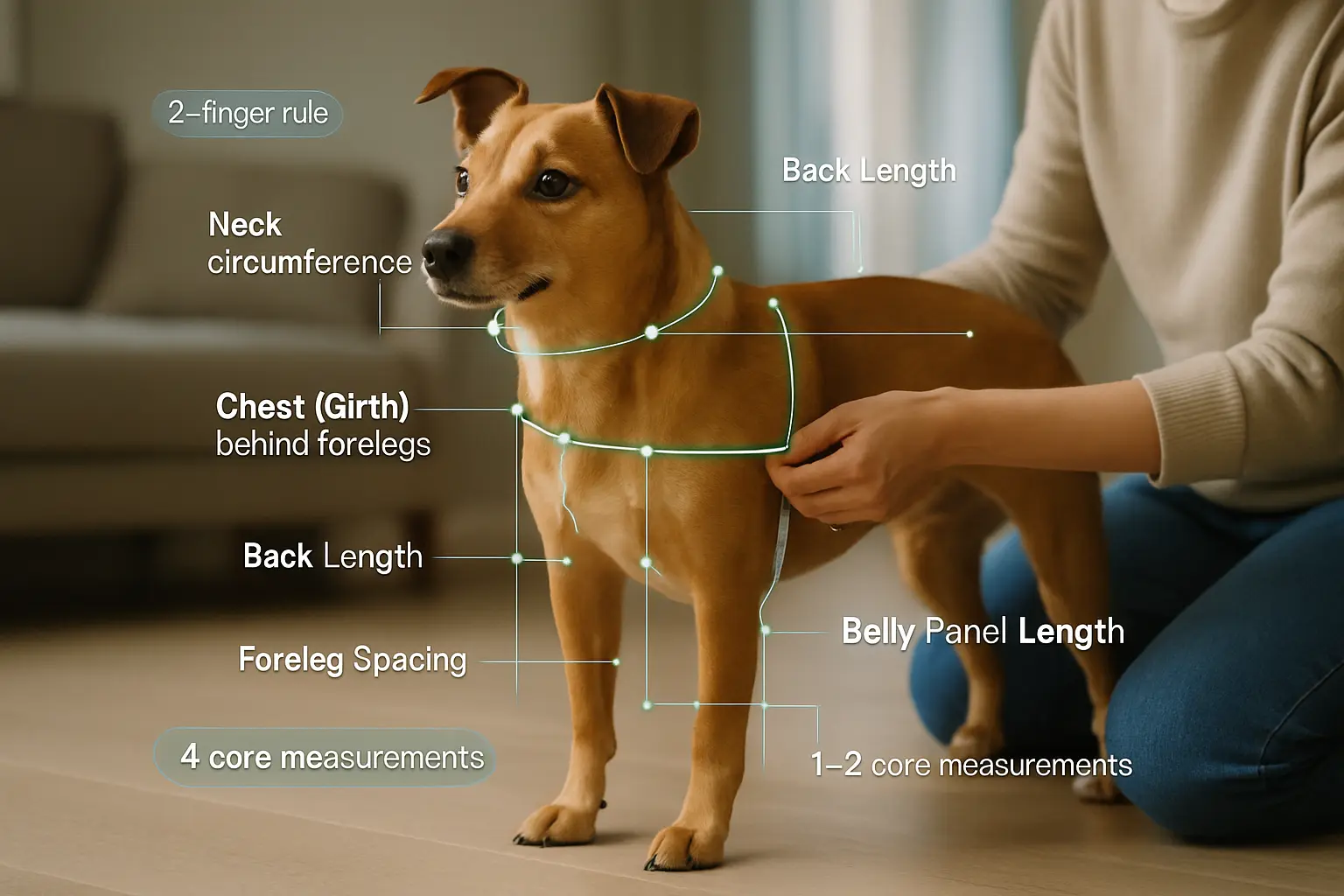
Accurate measurements ensure a warm, waterproof dog coat covers the belly without restricting movement. Start with a soft cloth tape. Measure the dog while it stands naturally on a flat surface. Record four core numbers: neck, chest (girth), back length and foreleg spacing. These guide both coat size and underbelly panel placement.
Measure the neck where a flat collar normally sits. For chest, wrap the tape at the widest point just behind the front legs. Back length runs from the base of the neck to the tail base. Foreleg spacing (distance between front legs) helps place belly panels and straps so the coat doesn’t ride up or gap.
Enter each number into the manufacturer’s size chart, and note recommended tolerances. If the coat lists a separate belly-panel length, compare it to the sternum-to-tail-base distance. For breed- and travel-related size guidelines, consult resources like dog breeds that fit under airplane seat for sizing perspective when planning travel with a coat.
Always keep the tape snug but not tight. Re-check measurements after a short walk, then use them to select the best-fitting coat. A correctly measured dog needs fewer returns and has better on-dog performance.
Measuring chest, back length, neck and foreleg spacing
Chest girth determines most coat sizes. Place the tape behind the front legs and wrap it fully around the ribcage at the widest point. Allow 1–2 inches for movement and layering. For heavy double-coated breeds, add 1–1.5 inches to prevent constriction.
Back length runs from the base of the neck (where the shoulder blades meet) to the tail base. Measure along the spine, not the coat, and keep the tape straight. Shorten or lengthen recommendations apply when coats have elastic rear panels or tail slits.
Measure neck circumference at the collar site, leaving enough room for two fingers under the tape. Foreleg spacing equals the distance between the inside fronts of the legs. This number guides where underbelly panels and leg straps must sit to avoid chafing.
When choosing a coat for combined travel and weather protection, consider crate and travel sizing too. See sizing tips in the best dog crates for car travel guide to reconcile coat fit with travel gear dimensions.
Checking belly panel length and overlap points
Measure belly panel length from the sternum (just behind the front legs) to the tail base. The panel should cover the lower ribcage and most of the belly without reaching the genitals. For puppies or long-backed breeds, prefer slightly shorter panels to avoid interference with movement.
Check where straps or fasteners overlap. Overlap points should land on broad, low-pressure areas—mid-chest or lower side—rather than on sensitive armpits or flank folds. A single wide strap distributes pressure better than multiple narrow straps.
Inspect leg openings and panel edges for raw seams or stiff trim. These cause rubbing when the dog moves. If a coat lists adjustable belly length or detachable panels, verify the minimum and maximum coverage against the measured sternum-to-tail length.
When trying on a coat, slide two fingers under each overlap and around straps. That confirms adequate breathing room while ensuring the belly panel remains snug enough to keep water out during walks or short runs.
How to choose when your dog falls between sizes
When measurements straddle two sizes, prioritize fit points most affected by weather: chest girth and belly coverage. Choose the larger size if the chest measurement would otherwise compress breathing or if the underbelly panel needs extra length. Select the smaller size for low-profile coats with significant adjustability.
Consider coat construction. Coats with broad hook-and-loop panels, elastic inserts, or multiple adjustment points accommodate size variation better. Insulated quilted coats often cost more if sized up, while shell-style waterproof coats usually allow more layering underneath.
Also factor in coat purpose. For travel or airline-restricted trips, check size limits and select a coat that won’t add bulk. For brand-specific guidance on travel allowances and size decisions, the airlines that allow dogs in cabin page helps reconcile coat bulk with carrier rules.
When in doubt, contact the manufacturer with exact measurements and body shape notes. Many brands advise on size swaps or custom adjustments before purchase.
Fit test: what a good on-dog fit looks like (movement, rubbing, coverage)
A proper fit lets the dog move freely. After fitting, observe the dog standing, walking, trotting and lying down. The coat should stay in place over the shoulders and not pull behind the front legs. Watch for restricted stride or elevated shoulders.
Check for rubbing at seam lines, under leg openings and along belly panel edges. Red marks or quick withdrawal during the first five minutes indicate pressure points. Tight straps or high-cut panels commonly cause rubbing.
Ensure the belly panel covers the lower chest and ribcage while leaving room at the hindquarters. The coat should not flap open at the sides when the dog runs. During a short jog, straps should remain secure and fasteners should not shift.
For travel comfort and motion-related issues, consider real-world testing in the car. Practical tips on reducing travel discomfort appear in No more doggie dramas: how to make car rides enjoyable for your motion-sick pup. If the coat causes any restriction or persistent rubbing, adjust, resize or choose a different cut before extended use.
Sizing tips for common body types and breeds
Correct sizing ensures a warm, waterproof dog coat with underbelly protection actually works. Measure three points: neck circumference, widest chest/girth, and back length from base of neck to tail. Measure while the dog stands naturally. Allow two fingers of slack for movement and layering. Check each brand’s size chart before buying and compare measurements rather than relying on breed names. A final quick test: fasten the coat and watch the dog walk—no pinching, gaping, or restriction.
Short-legged/long-backed breeds (dachshunds, corgis) — tailored fit tips
Choose coats with shorter back panels and centered belly protection. Look for split-gusset designs or rear cutouts that avoid bunching at the tail. Adjustable straps that sit low on the ribcage keep the coat from riding up. If the brand offers a size for “long body” or “low-slung” builds, prioritize that over generic small sizes.
Deep-chested or broad-bellied dogs (bulldogs, labs) — avoiding gaping
Prioritize wide belly panels and multiple fasteners. A single narrow strap often leaves gaps under the chest. Seek contoured cuts or stretchy neoprene that follow the ribcage. Confirm harness compatibility so the owner can attach a leash without forcing the coat to gape.
Large breeds and extra coverage considerations
Large dogs need coats with reinforced seams and extended underbelly panels. Wider Velcro or dual-strap systems prevent shifting during activity. Ensure the coat’s insulation won’t overheat; breathable liners and removable layers give flexibility for varying weather.
Puppies, growing dogs and adjustable or modular options
Pick adjustable styles with Velcro, multiple snap positions, or removable liners. Size up one size when growth is rapid, but avoid a coat that inhibits play. Modular pieces—detachable belly guards or extendable panels—stretch usable life. For tips on transporting young dogs safely, see how to transport a puppy in a car without a crate. Measure every few weeks during growth and confirm the fit before walks. CTA: measure now and compare size charts before checkout.
Care, maintenance and prolonging waterproofing
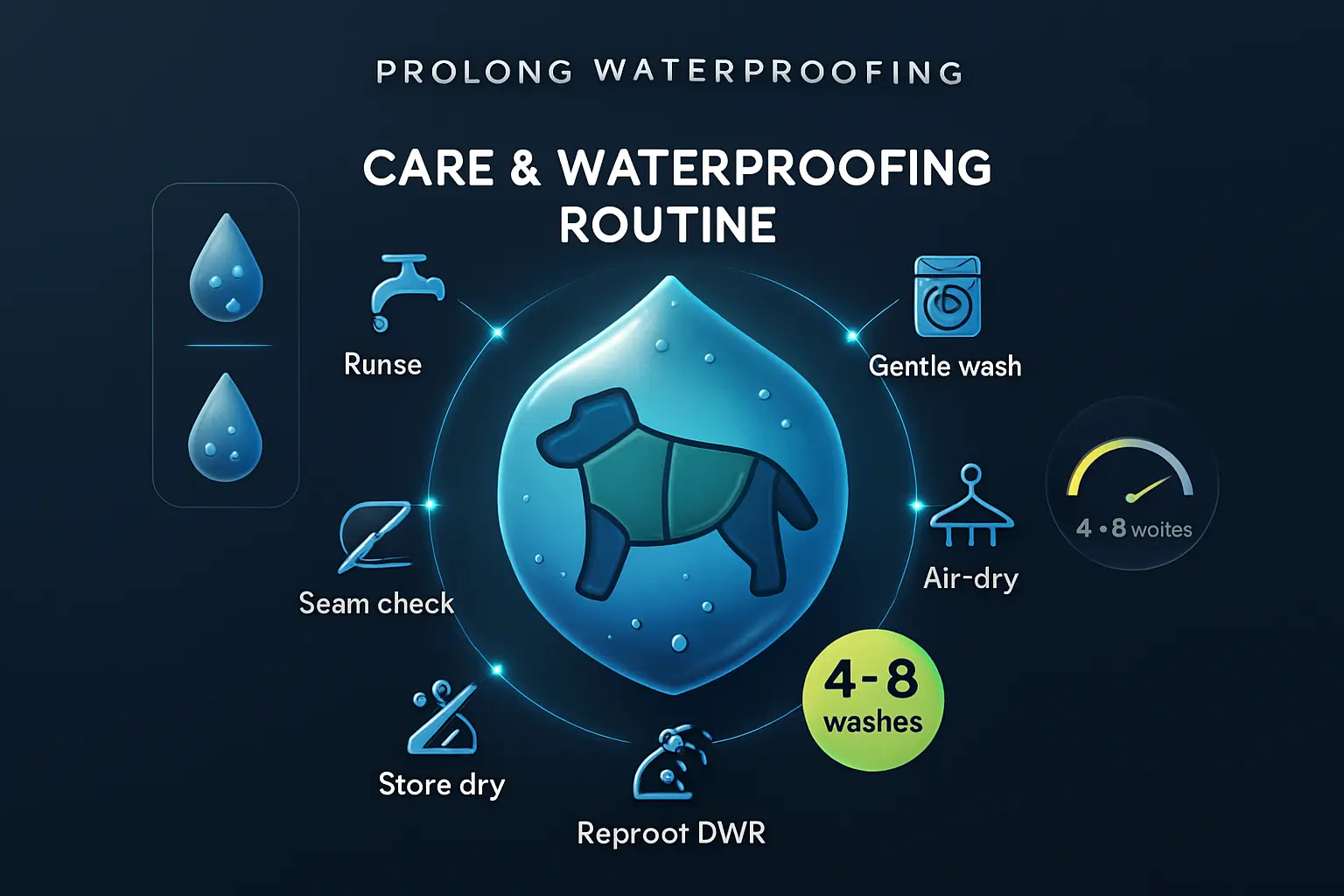
Owners who choose warm waterproof dog coats with underbelly protection must treat them like technical outerwear. Quick daily checks remove grit, road salt and mud before they abrade the outer shell or compromise seams. After wet walks, rinse the coat with fresh water and hang it to dry fully. For travel and seasonal storage, inspect fasteners, zippers and the underbelly closure for trapped debris or wear. Reproofing and seam repair extend service life and maintain breathability; aim to reapply a durable water repellent after several washes or whenever water stops beading.
Pack a small care kit when heading outdoors: mild detergent, a soft brush, spot-cleaning wipes and a compact seam tape or fabric glue. For owners planning multi-day trips, consult gear lists like the essential dog travel tips and gear for road trips for packing and maintenance ideas. A proactive approach reduces odors, prevents insulation collapse and keeps underbelly protection intact. Consider a reputable DWR spray or professional reproofing each season. Prompt minor repairs and routine maintenance keep the coat performing and protect the dog on cold, wet walks.
Washing and drying rules by material and insulation type
Washing rules vary by shell fabric and insulation. Owners should read the manufacturer’s label before cleaning. For polyester or nylon shells, use a gentle machine wash with cold water and a liquid, non-detergent cleaner. Avoid bleach and fabric softeners; they strip water repellents and clog membranes. Use a gentle cycle and fasten all closures to prevent snags.
For fleece liners and synthetic fill, tumble dry on low with dryer balls to restore loft. Down insulation requires special down soap and low-heat tumble drying with several clean tennis balls to redistribute loft. If the coat has bonded seam tape or waterproof membranes, air-dry flat away from direct heat and sunlight. Hand-wash delicate softshells and rigid laminates to reduce delamination risk. After drying, test water repellency by sprinkling a few drops—if water soaks in, plan to reproof.
Reproofing water repellents and seam care
Reproofing restores DWR and keeps the outer shell shedding water. Owners can use wash-in or spray-on products; wash-in treatments evenly refresh the whole garment, while sprays target high-wear areas like the hood and underbelly. Apply a product matched to the fabric type and follow drying instructions to activate the treatment. Reproof after four to eight washes or when droplets stop beading.
Seams demand regular attention. Inspect taped seams and stitched channels for lifting or puckering. Small seam failures respond well to seam sealant or clear fabric glue; larger separations benefit from seam tape patches applied per product directions. Replace split zippers or broken buckles promptly—temporary fixes include heavy-duty adhesive and stitchless zipper pulls until a proper replacement arrives. Schedule a full reproof and seam inspection at season change to catch slow-developing failures.
Quick on-walk fixes for tears, fastener failures or mud
Quick fixes keep walks on schedule and prevent further damage. For fresh mud, knock off clumps and use pet-safe wipes or a damp cloth to remove residue before it sets. Small tears take a fabric repair patch or adhesive-backed tape; press firmly and keep the dog calm until the patch sets. For ripped seams, a compact sewing awl and heavy thread let owners stitch temporary repairs on the trail.
Fastener failures need creative swaps. A zip-tie can hold buckles together until a replacement arrives. Replace a lost snap with a multi-size quick-snap kit. Carry a small roll of waterproof repair tape and a needle-and-thread kit in the walk bag. For recurring failures, pack a spare coat or an emergency blanket to protect the dog from cold and wet. Outdoor-focused readers may find extra preparedness tips in these 9 tips for hammock camping with your dog, which include lightweight repair gear recommendations.
Storage and seasonal rotation tips
Store coats clean and fully dry to prevent mildew and insulation breakdown. Use breathable storage—cotton bags or open shelving—rather than sealed plastic bins. Fold gently to avoid compressed insulation; hang bulkier coats on wide, padded hangers. Place a small desiccant packet in the storage area to control moisture.
Rotate coats by season and condition: reserve heavy insulated coats for winter and lighter waterproof shells for transitional months. Mark sizes and condition on a label to speed selection. Before bringing a coat back into service, inspect the underbelly protection, test fasteners and reproof if water repellency faded. Keep a repair kit and a spare set of closures with stored gear. Regular seasonal rotation and a brief pre-use check preserve performance and extend coat lifetime.
Quick FAQs and final buying checklist
When does a dog need belly coverage vs a standard coat?
Belly coverage matters when a dog has a low-slung chest, long fur that mats, or frequent exposure to deep snow, rain, or mud. Short, dense-coated breeds in mild weather usually do fine with a standard back-only coat. Choose underbelly protection when the underside gets wet or dirty during walks, or when a dog shivers along its chest and belly.
Can dogs wear a harness with full underbelly protection?
Yes, but fit matters. Look for coats with harness slots, reinforced belly panels, or split-front designs. A harness should sit flat against the dog without bunching the coat. If the coat blocks a leash attachment, use a vest-style harness worn over the coat or one with a top D‑ring access point.
How to introduce your dog to wearing a coat
Start slowly: place the coat near the dog, then drape it for short periods. Reward calm behavior with treats and praise. Gradually increase wear time and add gentle movement, like a short walk. For anxious dogs, pair coat training with calming strategies from 9 natural ways to remedy your dog’s travel anxiety.
6-point buying checklist to use while shopping
Use this quick checklist before purchase:
- Fit: Measure neck, chest, and length; allow movement at shoulders.
- Waterproofing: Fully sealed seams and water‑repellent outer shell.
- Insulation: Layering or fleece lining for colder conditions.
- Underbelly design: Full panel or adjustable flap that stays secure.
- Harness compatibility: Harness slots or top-access D‑ring.
- Care: Machine-washable materials and replaceable fasteners.
Apply this checklist, then try the coat on a brief walk. If the dog moves freely and stays dry, the coat passes. Shop confidently and prioritize fit over brand. CTA: measure the dog now before comparing models.
Summary
7 Best Warm Waterproof Dog Coats With Underbelly Protection helps shoppers quickly compare weatherproof shells, insulation types, and underbelly designs so dogs stay dry, warm, and mobile on wet, cold walks. The guide explains how full-panel versus strap-style coverage affects warmth, bathroom ease, and harness use, then shows how to measure neck, chest, back length, and foreleg spacing for a confident fit.
With breed-specific sizing tips, on-dog fit tests, and care guidance—washing, reproofing, and simple field repairs—buyers can match a coat to climate and activity level, reduce returns, and extend gear life. Next steps: measure the dog, compare specs for waterproofing and underbelly security, confirm harness access, and review return and repair options before checkout.
Key Takeaways
- Prioritize real waterproofing: TPU-coated shells, durable water repellent, and fully taped seams outperform “water-resistant” claims.
- Match underbelly coverage to use: Full panels maximize warmth and mud protection; strap-style designs boost mobility and drying speed.
- Fit drives comfort: Measure neck, chest (girth), back length, and foreleg spacing; size for chest room and secure belly coverage without restricting stride.
- Harness-ready matters: Choose reinforced leash slots or cutouts and test harness placement with the coat on before heading out.
- Balance warmth and movement: High‑loft synthetic insulation keeps heat when damp; concentrate insulation over chest/back and keep joints free.
- Maintain performance: Rinse after wet walks, machine-wash per label, reproof DWR when water stops beading, and inspect seams and fasteners each season.
FAQ
- What defines a truly waterproof dog coat?
Fully seam-sealed construction with a waterproof membrane or a stated hydrostatic head rating, plus a DWR-treated shell and storm flaps over closures. Taped seams at stress points prevent leaks. - How should owners measure for reliable underbelly coverage?
Record neck, chest (girth), back length, and foreleg spacing, then compare sternum-to-tail-base distance to the coat’s belly-panel length. Prioritize chest room and panel security over aesthetic length. - What’s the difference between full-panel and strap-style belly guards?
Full panels deliver maximum warmth and splash protection but can feel bulkier; strap-style systems are lighter and freer for running, with less coverage in wind and slush. - Why choose synthetic insulation over down for wet walks?
Synthetic fill retains warmth when damp and dries faster, making it more forgiving in rain, snow, and road spray. It’s also easier to wash and maintain. - How often should DWR be renewed and seams checked?
Reproof after 4–8 washes or whenever water stops beading, and inspect seams after muddy or prolonged wet outings. Patch small issues early to prevent larger failures.