No More Doggie Dramas: How to Make Car Rides Enjoyable for Your Motion-Sick Pup!
Affiliate Disclaimer: As an affiliate, we may earn a small commission when you make a purchase from any of the links on this page at no additional cost to you!
Last Updated on October 20, 2025
No More Doggie Dramas starts with understanding why a motion-sick pup feels awful in the car. Car-induced motion sickness in dogs stems from a sensory mismatch between the eyes and vestibular system, which triggers nausea, drooling, and panic. With the right plan, even anxious riders can learn to travel calmly.
This guide shows owners how to make car rides enjoyable: fast roadside fixes, smart pre-ride routines, and car setup that stabilizes movement. It also covers step-by-step desensitization, proven antiemetics and safe supplements, practical checklists, and clear signs that need a vet. Follow the strategies to turn shaky trips into smooth, stress-free journeys.
What causes and looks like car-induced motion sickness in dogs
Car-induced motion sickness occurs when a dog’s brain receives conflicting movement signals. Visual cues from the eyes, motion information from the inner ear, and pressure sensors in muscles and joints disagree. That mismatch triggers nausea and other autonomic responses. Motion alone can cause the problem, but the vehicle environment amplifies it. Strong smells, heat, poor ventilation and anxiety raise the chance of a reaction.
The outward presentation varies. Some dogs show subtle signs, like restlessness, lip-licking or increased salivation. Others show overt reactions, such as vomiting, drooling or diarrhea. Some develop avoidance of the car entirely, resisting entry or vocalizing before a trip. Owners should note when symptoms occur — immediately on movement, after a short ride, or only on long trips — to guide next steps.
For safe travel and fewer episodes, many owners pair behavioral training with secure travel gear. Reviews of the best dog crates for car travel highlight options that reduce forward motion and give dogs a predictable space. A stable crate or harness can ease discomfort and help a dog adapt.
How motion disrupts the inner ear and balance system
The inner ear contains the vestibular apparatus. It has semicircular canals and otolith organs that sense rotation and linear acceleration. When a car turns, accelerates or brakes, the fluid in these canals moves. The brain compares signals from the inner ear to visual input. If the eyes show a stationary interior while the vestibular system detects motion, the mismatch creates nausea.
This sensory conflict triggers the autonomic nervous system. Symptoms include salivation, sweating pads, rapid breathing, and vomiting. Young dogs and puppies often lack mature vestibular integration, so they react strongly. An existing vestibular disorder, ear infection, or inflammation increases sensitivity. Persistent mismatch can cause learned fear; the dog begins to associate the car with illness.
Owners should check ears for infection and avoid intense head rotations during travel. Gentle exposure to motion and short, frequent trips help the nervous system adjust. For more on how motion affects a dog’s ears during travel, see does flying hurt dogs’ ears?
Typical signs and behaviors during and after rides
Signs range from minor to severe. Early warning behaviors include yawning, lip-licking, drooling and repeated swallowing. A dog may pace, circle, or press its body low to the vehicle seat. Whining, whimpering and trembling often appear once discomfort escalates. Some dogs freeze and refuse to move, which owners sometimes misread as calmness.
Vomiting and diarrhea usually signal full-blown motion sickness. After a ride, lethargy and reduced appetite can persist for several hours. Behavioral fallout includes increased clinginess, avoidance of the car, or panic at the sight of transport gear. Recognizing the sequence helps owners intervene before vomiting occurs.
For behavior-focused tips on calming a dog in the car and preventing escalation, consult the piece on why dogs cry in the car. Short training sessions, positive reinforcement for calm entry, and gradual desensitization reduce signs over time.
Risk factors: age, breeds, anxiety and underlying conditions
Age plays a major role. Puppies and young dogs show higher susceptibility because their vestibular systems still develop. Older dogs with inner ear disease or neurological conditions also face elevated risk. Certain breeds may appear more prone due to body conformation or sensitivity, though individual variation is large.
Anxiety and prior negative trips compound motion sickness. A dog that vomited once can form a strong association, which boosts anticipatory nausea. Chronic ear infections, vestibular disease, and some medications also raise susceptibility. Medical issues such as vestibular neuritis or middle-ear inflammation require veterinary evaluation before travel resumes.
Owners should assess both medical and behavioral risks. Natural calming techniques and structured desensitization help with anxiety-driven cases; the guide to 9 natural ways to remedy your dog’s travel anxiety offers practical options. When medical causes exist, a vet can recommend diagnostics and targeted treatment.
How a vet evaluates car sickness and rules out other problems
A veterinarian starts by separating true motion sickness from anxiety, gastrointestinal disease, and ear or neurologic problems. The clinician asks targeted questions about timing, frequency, and the exact signs seen in the car. Short vomiting episodes that occur only during travel point toward vestibular or motion-related nausea. Continuous vomiting, weight loss, or appetite changes suggest systemic illness. The vet also reviews vaccination and medication history and checks for recent toxin exposure.
The physical exam focuses on hydration, abdominal pain, and neurologic signs such as head tilt or ataxia. If ear disease or a vestibular disorder appears likely, the vet documents the findings and describes the next diagnostic steps. The goal remains clear: rule out medical causes that mimic motion sickness before starting behavioral or anti-nausea treatments. Owners who want practical at-home measures can also read 9 natural ways to remedy your dog’s travel anxiety for complementary strategies that sometimes ease travel-related distress.
What information and videos to bring to the appointment
Owners should bring concise, timestamped videos showing the dog’s behavior in the car. Capture before, during, and after the ride. Record the dog’s posture, breathing rate, salivation, retching, and any vocalizing. Short clips work best; several 10–30 second clips often suffice. Note travel conditions, such as window position, seat type, and whether the dog was in a crate or loose.
Bring a written timeline of events: when symptoms started, progression, foods or treats given, medications and recent vet care, and changes in environment. Also include copies of prior labs or imaging if available. If the dog seems distressed rather than nauseated, the vet will consider behavioral triggers; owners can compare the signs with similar cases like those described in why dogs cry in the car. Clear documentation speeds diagnosis and treatment decisions.
Ear and vestibular checks your vet will perform
The vet inspects external ears and performs an otoscopic exam to look for foreign bodies, inflammation, or discharge. Middle ear disease can present with nausea and imbalance, so the clinician assesses pain on ear manipulation. A careful cranial nerve and neurologic exam follows, testing reflexes, gait, and posture. Subtle head tilt, circling, or nystagmus suggests vestibular involvement.
When signs point to peripheral vestibular disease, the vet evaluates for ear infections and may recommend topical or systemic therapy. If central neurologic signs appear, the vet documents asymmetric reflexes or proprioceptive deficits. For owners curious about ear-related travel effects and pressure changes, related reading includes does flying hurt dogs’ ears?—it explains ear physiology and why vestibular signs matter for travel.
When tests or referrals are recommended
The vet orders tests when physical findings or history raise concern. Basic bloodwork and urinalysis screen for metabolic or infectious causes. If the ear exam looks abnormal, cytology or culture helps target therapy. Imaging appears when neurologic deficits, persistent vestibular signs, or unexplained vomiting occur. Radiographs, CT, or MRI evaluate middle ear, brainstem, and inner ear structures.
Referral to a veterinary neurologist or an internal medicine specialist becomes appropriate for complex or nonresponding cases. Specialists guide advanced imaging and targeted treatments. When management will include safety changes, owners can research practical travel gear such as the best dog crates for car travel to ensure secure transport during follow-up visits. Ask the primary vet about referral timing if symptoms persist after initial therapy.
Fast, on-the-road fixes to soothe a queasy pup
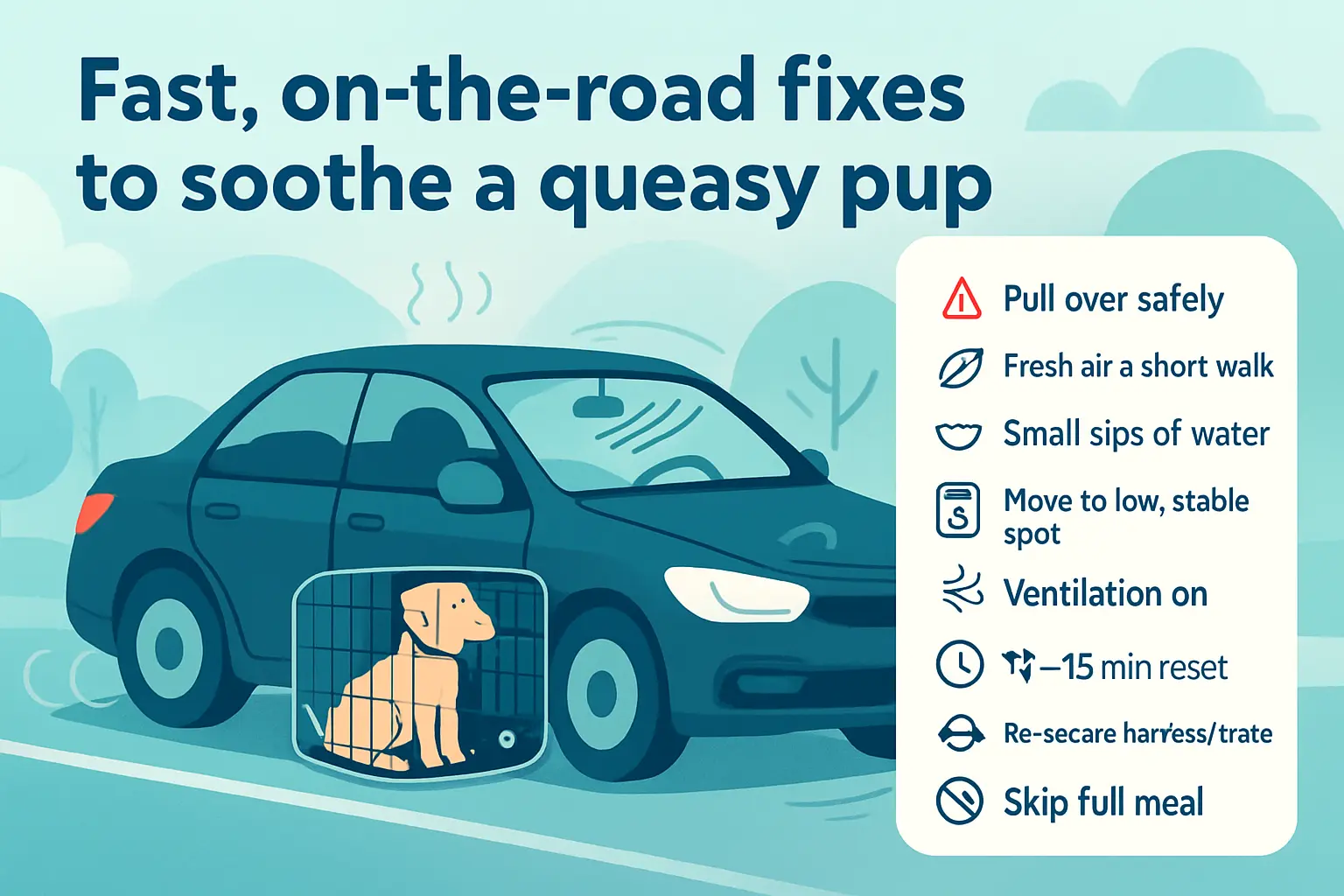
When nausea hits mid-trip, act quickly to reduce motion and discomfort. Pull over safely at the next rest stop and let the dog step out for fresh air and a short walk. If the dog vomits, clean the area promptly and offer water in small sips. Limit activity for 10–15 minutes while watching breathing and alertness.
Open windows slightly or run the air conditioning to keep airflow steady; cool, moving air helps many dogs. Move the dog to a lower, more stable spot in the vehicle when possible — the back seat floor or a secured crate reduces motion perception better than a high seat.
For immediate restraint or re-securing, follow practical methods like those in 5 ways to secure a dog crate in car. If nausea continues, consider a short break from travel or consult a veterinarian about an antiemetic. Owners should avoid offering a full meal right away; small water amounts and a calm environment allow the dog to settle before resuming the trip.
Pre-ride actions: food, water and calming rituals
Preparation reduces the chance of motion sickness. Feed a light meal three to four hours before departure to give the stomach time to settle. Avoid fatty or heavy foods that delay emptying. Offer small amounts of water up to the ride, and withhold large volumes immediately before travel.
A brief walk and a potty break 20–30 minutes before leaving lowers anxiety and reduces the chance of accidents. Train the dog on short, increasing-duration drives to build tolerance. Gentle handling and a brief calming ritual — soft petting, a low voice, or a favorite blanket — signal safety and routine.
Consider the gear and planning tips in essential dog travel tips and gear for road trips to standardize pre-ride routines. When natural options fail, a vet can advise anti-nausea or anti-anxiety medication for occasional trips. Owners should trial any supplement or prescription on a short drive before a long journey.
Car setup: restraint, seating position and airflow
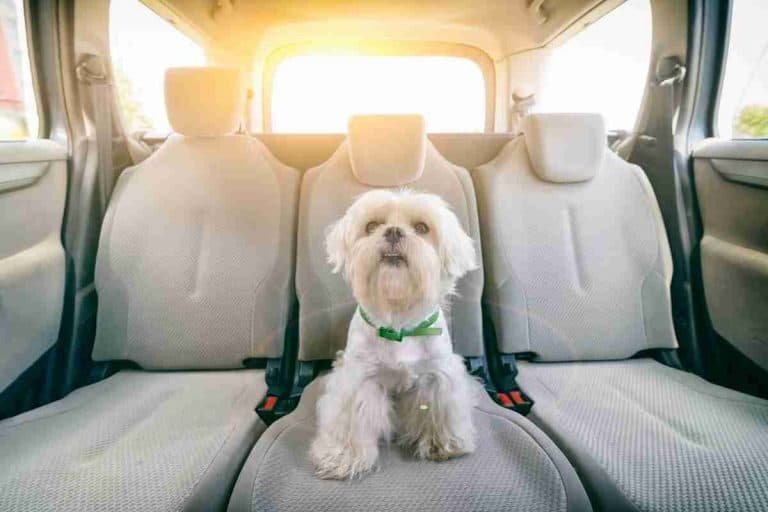
Proper restraint reduces motion and increases safety. A crash-tested crate or a vehicle harness attached to the seatbelt keeps the dog stable. Place the crate or harnessed dog on the vehicle’s lowest, middle area when possible to minimize sway and provide a forward view.
Front seats increase motion feeling and risk from airbags. The back seat or secured cargo area offers better stability and fewer sudden movements. Position the dog so it faces forward or sits on the floor of the back seat; facing sideways increases vestibular confusion.
Maintain steady temperature and airflow. A vent aimed near the dog, but not directly at its face, helps. Avoid wide-open windows that create uneven drafts. For crate recommendations and sizing that improve stability, see best dog crates for car travel in 2023. Test the setup on short trips and adjust placement until the dog remains calm and balanced.
Portable comforts: toys, pheromones, chewables and scents
Bring items that anchor familiarity and distract the dog. A favorite soft toy or a worn blanket provides scent cues that reduce stress. Offer durable, non-messy chewables during travel to focus the dog and ease nausea-related anxiety.
Pheromone sprays and collars mimic calming signals and often help within minutes. Apply a pheromone spray to the dog’s blanket before the ride, or use a collar during longer trips. Natural aids such as ginger chews or veterinarian-recommended supplements can reduce stomach upset; test these on short drives first.
Owners should avoid essential oils directly on bedding; many scents irritate dogs. For a fuller set of calming strategies and natural remedies, consult 9 natural ways to remedy your dog’s travel anxiety. Try one new comfort item per trip so the dog associates it with calm, not overstimulation. If motion sickness persists, schedule a vet visit for tailored options and safe medications.
Step-by-step desensitization to rebuild ride tolerance
Desensitization rebuilds a dog’s tolerance to car travel by shrinking the experience into tiny, non-threatening steps. The handler should schedule several short sessions each day. Start with one-minute exposures and stop before the dog shows signs of stress. Gradual, consistent repetition changes the dog’s emotional response to the vehicle.
Track objective markers of progress: time spent calm, panting rate, drooling, and whether the dog voluntarily approaches the car. If signs of nausea appear, reduce the intensity of the next session. Use quiet voices and slow movements to avoid escalating arousal. Owners who wrestle a reluctant dog into a vehicle risk reinforcing fear.
When the dog accepts short, stationary sessions, add minimal sensory input: engine off but door closed, then engine on, then the car moving a few feet. Each successful step should be followed immediately by a reward the dog values. For guidance on dogs that refuse car entry, see dog refusing to get into car. Maintain sessions brief and predictable. Slow progression and reliable rewards create new, positive associations and reduce motion-related anxiety.
A staged exposure plan from parked car to longer trips
Design a clear progression and set passing criteria for advancement. Use this staged plan:
- Parked car, door open: allow the dog to sniff and explore for 1–5 minutes. Reward freely.
- Door closed, engine off: sit together inside for short intervals. Reward calm behavior.
- Engine on, parked: a few minutes with windows slightly open for ventilation.
- Short roll: drive one block or five minutes on quiet streets. Stop while the dog is calm and reward.
- Gradually extend trip length and add low-speed roads, then highways as tolerance builds.
Advance only when the dog shows relaxed posture and interest in the next stage. Record session results and require at least three calm, successful trials before moving on. During early moving stages, keep motion low by accelerating gently and taking smooth turns. For packing, comfort and gear tips to help early stages, consult essential dog travel tips and gear for road trips. This staged exposure reduces sensory overload and supports steady improvement.
Counterconditioning techniques using treats and rewards
Counterconditioning replaces negative feelings about the car with positive ones. Begin by delivering high-value rewards—boiled chicken, liver treats, or a favored chew—only around the car. Timing matters: reward the dog before signs of stress develop, not after anxiety peaks.
Use a shaping approach. Reward small steps: approaching the vehicle, stepping in, sitting inside, tolerating engine noise, and remaining during short drives. Pair each step with a consistent cue, such as “good ride” or a clicker, then reward immediately. Gradually reduce food rewards and shift to intermittent reinforcement while keeping praise and brief play.
If motion sickness triggers nausea, shift to non-food rewards like gentle petting or a favorite toy. Combine counterconditioning with calming strategies—short sessions and fresh air—to limit nausea. For complementary natural anxiety remedies and strategies, see 9 natural ways to remedy your dog’s travel anxiety. Consistency and carefully timed rewards rewire the dog’s emotional response to travel.
Tools to teach relaxation: mats, crates and calming cues
Physical tools speed learning when handlers use them correctly. A familiar mat gives the dog a consistent “place” in the vehicle. Train the dog to lie on the mat with a settle cue. Reward calm lying and extend the hold time gradually. The mat signals safety and reduces pacing.
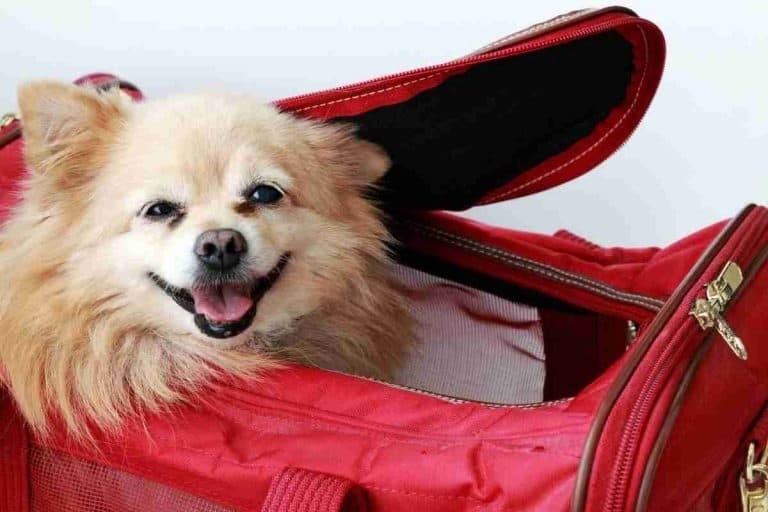
Crate training offers a secure, motion-stable environment for many dogs. Introduce the crate at home first, then place it in the car once the dog accepts it. Fasten the crate securely to prevent shifting. For recommendations on travel-safe crates, consult best dog crates for car travel. Harnesses and vehicle restraints also help dogs feel anchored while allowing visual contact with the handler.
Teach a short calming cue such as “settle” or “rest” by rewarding relaxed breathing and soft eyes. Combine the cue with the mat or crate so it generalizes to the car. Use pheromone sprays or a familiar-smelling blanket when needed. Offer a short supervised practice drive of five to ten minutes to test tools and cues. If improvement stalls, consult a veterinarian about motion-sickness options. Try the plan for two weeks, and note measurable changes in the dog’s comfort.
Medications and supplements: options, timing and safety
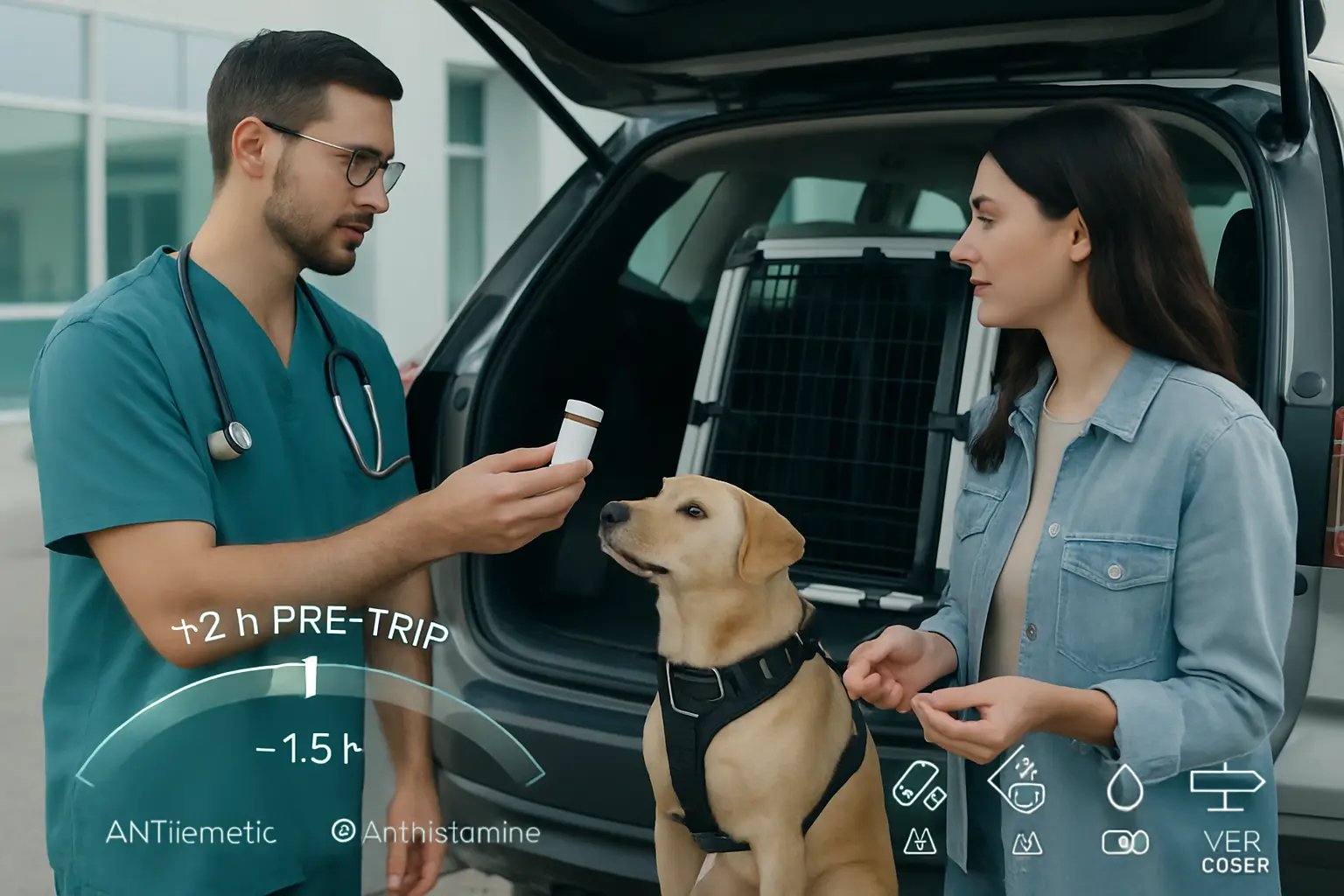
When behavioral strategies alone do not prevent car sickness, targeted medications and supplements help. This section outlines common veterinary prescriptions, over-the-counter options, and best practices for dosing and safety. Veterinary guidance matters because many products carry risks for certain breeds, ages, and medical conditions.
Veterinary prescriptions (antiemetics, sedatives, anxiolytics)
Veterinarians often prescribe specific antiemetics to stop nausea and vomiting. Common choices include maropitant (Cerenia) and drugs like ondansetron or metoclopramide for selected cases. For severe anxiety, vets may recommend trazodone or gabapentin. Sedatives such as acepromazine reduce motion-related agitation but do not treat nausea.
Key safety notes:
- Always use a prescription at the dose the vet gives. Dosing varies by weight and health status.
- Discuss organ disease, pregnancy, and current medications to avoid harmful interactions.
- Do not sedate a dog that must climb in and out of a vehicle without support; sedation can impair coordination.
Over-the-counter remedies and supplements (ginger, antihistamines, CBD) with precautions
Some owners try ginger, antihistamines, or CBD oil. Ginger has modest evidence for reducing nausea and is well tolerated when used appropriately. Antihistamines such as diphenhydramine or meclizine sometimes help mild motion sickness, but effectiveness varies.
CBD shows anecdotal benefit for anxiety, but evidence for motion sickness is limited. Quality and purity vary widely between products.
Precautions: Avoid human combination formulas and topical patches unless the vet approves. Check labels for xylitol and other toxic additives. For natural approaches and calming strategies, see 9 natural ways to remedy your dog’s travel anxiety.
How and when to give meds for best effect and safety notes
Timing depends on the product. Antiemetics generally work when given one to two hours before travel, though vets will advise exact timing. Many anxiety medications require a trial dose before a long trip to confirm the response and safe dose.
Follow these practical rules:
- Administer prescriptions exactly as directed and test on a short drive first.
- Give oral supplements with a small snack if the vet recommends it, to reduce stomach upset.
- Never double-dose if motion returns; contact the veterinarian.
Call to action: Ask a veterinarian for a tailored medication plan, a trial run on a short route, and written dosing instructions before a long trip.
A practical travel checklist and routine for smooth trips
For owners aiming to make rides calm and reliable, a clear checklist and repeatable routine reduce motion-sickness triggers. No More Doggie Dramas: How to Make Car Rides Enjoyable for Your Motion-Sick Pup! works when preparation, in-ride habits, and recovery sync.
Key elements to include:
- Health: recent vet check, medication plan, and fasting window.
- Containment: a well-sized crate or crash-tested harness.
- Comfort: non-slip bedding, absorbent pads, a blanket and familiar toy.
- Safety gear: seat anchors, travel leash, and ID microchip info.
- Clean-up kit: enzyme cleaner, towels, waste bags, and a portable water bowl.
- Practice plan: short acclimation drives that build tolerance slowly.
Owners should document a simple routine and follow it each trip. Consistent order — pack, buckle, brief calm walk, quiet engine time before departure — signals safety to a dog. For broader packing and gear guidance, consult essential dog travel tips and gear for road trips. A concise checklist reduces last-minute stress and helps the whole routine run predictably.
Pre-trip packing and car-prep checklist
Packing with motion-sick pups focuses on minimizing nausea triggers and maximizing stability. Start with vet-approved items and build a compact kit.
- Medications: carry antiemetics if prescribed, and a written dosing schedule.
- Crate or harness: choose one sized for the dog’s comfort and secure it to the vehicle.
- Bedding and pads: use low-profile, non-slip bedding and disposable absorbent pads.
- Hydration and light snacks: bottled water and a small travel bowl; avoid full meals 3–4 hours pre-trip.
- Calming tools: pheromone sprays, a favorite blanket, and a chew toy for distraction.
- Emergency file: vaccine records, allergy notes, and a brief vet contact card.
Prepare the car: set climate control to a steady temperature and pre-test crate anchors or seatbelt clips. Owners should run a short pre-trip practice to check the dog’s reaction. For crate options and fit, see the best dog crates for car travel in 2023: a comprehensive review. Packing deliberately prevents many avoidable incidents during travel.
In-ride routine: stops, ventilation, pacing and driver habits
A calm in-ride routine reduces motion sickness. Drivers control the environment and pacing to keep the dog steady.
- Seating: secure the dog in a crate or harness in the rear seat or cargo area to limit motion perception.
- Ventilation: keep fresh air moving without strong drafts on the dog’s face.
- Pacing: accelerate and brake smoothly; maintain steady speeds on highways when safe.
- Stops: schedule a short break every 1.5–2 hours for a calm walk and chance to relieve itself.
- Noise and stimulation: keep music low and avoid loud conversations or sudden noises.
- Feeding: do not feed during transit; small water sips are fine if the dog tolerates them.
Driver habits matter: avoid sharp turns and sudden lane changes. If motion signs appear, pull over safely and offer a brief outside break. For tips on securing the dog’s space inside the vehicle, consult 5 ways to secure a dog crate in car. Repetition of this calm routine reinforces comfort over time.
Post-ride recovery, cleanup and feeding guidelines
After arrival, a predictable recovery routine helps dogs bounce back from nausea and reduces mess. Owners should prioritize calm and quick cleanup.
- Immediate steps: move the dog to a quiet spot, offer water in small amounts, and let the dog rest.
- Feeding timeline: wait one to two hours after travel before offering a small bland meal. If vomiting occurred, extend fasting and consult a vet.
- Cleanup: use enzyme cleaners on upholstery and carpets to remove odor and prevent repeat incidents.
- Hydration checks: monitor for normal urination and alertness; offer additional water if the dog drinks without vomiting.
- Soothing: brief low-key play or a gentle walk can normalize digestion, but avoid rigorous activity.
Keep a compact recovery kit in the car with towels, enzyme cleaner, disposable gloves, and spare pads. For handling in-car accidents and hygienic cleanup tips, see dog poops in car. If motion sickness persists beyond a few trips, pursue a veterinary reassessment and adjust the travel plan accordingly.
Long-term plans and when to escalate care
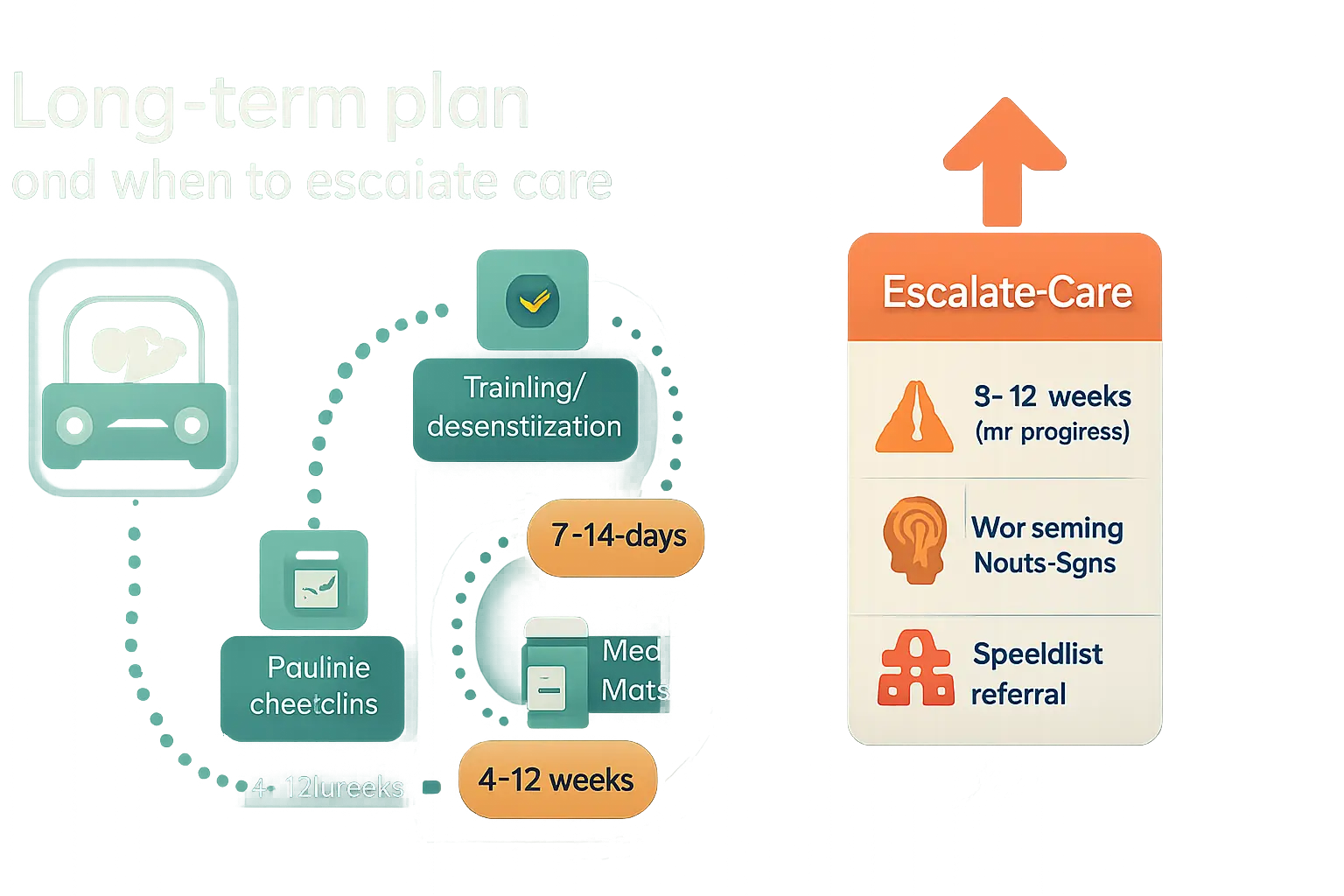
Long-term management focuses on reducing motion sickness and improving a dog’s comfort over months. Create a stepwise plan that combines gradual desensitization, consistent training, and medical support when needed. Start with short exposure sessions, increasing duration slowly while rewarding calm behavior. Rotate techniques every few weeks if progress stalls, and document reactions to identify what helps.
Medication can be part of a long-term plan. Anti-nausea drugs and short-term anxiolytics help some dogs while training takes effect. A veterinarian should set dosages and monitor side effects. When a dog shows no measurable improvement after a structured program of training and appropriate meds, escalate care. Escalation may include diagnostic tests for vestibular disease, inner-ear infection, or gastrointestinal causes. Specialists, such as a veterinary neurologist, can evaluate persistent balance problems or severe nausea.
Owners can learn natural, complementary strategies to support long-term improvement. Resources like 9 natural ways to remedy your dog’s travel anxiety outline calming supplements and environmental fixes that may reduce reliance on medication. Maintain regular vet check-ins every 4–12 weeks while adjusting the plan.
When to set a formal escalation plan: no progress after 8–12 weeks of combined training and meds, worsening symptoms, or new neurological signs. At that point, pursue diagnostics and specialist referral.
Monitoring progress and adjusting training or meds
Consistent tracking makes adjustments effective. Use a simple log to record trip length, behaviors (drooling, whining, vomiting), and severity. Rate each ride on a 1–5 scale for anxiety and nausea. Review the log weekly to spot trends.
Adjust training based on measurable gains. If a dog achieves shorter trips calmly, slowly extend duration by 5–10 minutes. If progress stalls, change stimuli: vary seating position, add brief stationary car sessions, or switch rewards. Keep training sessions frequent and predictable.
Medication trials require defined timelines. Try antiemetics for 7–14 days and reassess. If side effects occur, stop and consult the vet. If a medication reduces symptoms but does not eliminate them, combine it with continued desensitization. Always reassess dose and necessity every 4–8 weeks.
Gear and logistics influence outcomes. Use appropriately sized crates, harnesses, or seat barriers to reduce motion sensation and anxiety. For practical gear tips and travel-ready setups, see essential dog travel tips and gear for road trips. Regularly review the plan and iterate until rides become predictable and mostly stress-free.
Signs that need urgent veterinary attention
Some symptoms indicate emergencies rather than routine motion sickness. Seek immediate veterinary care if a dog shows any of these signs during or after car travel:
- Repeated, forceful vomiting or vomiting with blood
- Severe lethargy, collapse, or loss of consciousness
- Uncontrolled bleeding, pale gums, or rapid breathing
- Seizures, sustained tremors, or sudden blindness
- Marked head tilt, circling, or inability to stand
These signs may reflect poisoning, severe vestibular disease, heatstroke, or an acute systemic illness. Do not wait to see if symptoms improve.
If a dog shows concerning but less dramatic signs—intense drooling, prolonged panting, or continuous whining—contact the veterinarian for advice. Some problems start as behavioral distress but progress quickly to medical emergencies. For context on distress-related car behaviors and when they signal more, readers can review why dogs cry in the car.
When in doubt, call an emergency clinic. Prompt assessment can prevent complications and speed recovery.
Alternatives: limiting travel or seeking a behaviorist
When remediation stalls or travel remains unsafe, consider practical alternatives. Limit trips to essential outings and keep them short. Break longer journeys into multiple short legs with calm rest stops. Whenever possible, use local services to reduce travel needs, such as mobile grooming, home veterinary visits, or delivery options.
For dogs that resist entry or show entrenched fear, a certified behaviorist can deliver targeted, evidence-based plans. Behaviorists provide structured desensitization protocols, counterconditioning, and management strategies tailored to the dog’s history. They also advise on when medication-assisted behavior modification will give the best results.
Owners facing persistent refusal to enter vehicles should explore stepwise entry programs and safety solutions like a ramp or lift. Practical tips on handling a dog that resists car entry appear in dog refusing to get into car. A behaviorist can coordinate with a veterinarian to combine behavioral therapy and medical options.
CTA: If limiting travel does not resolve symptoms, arrange a behaviorist consult and a veterinary recheck to set a coordinated, long-term plan.
Owners’ rapid FAQs and myth-busters
Owners often encounter quick questions and common myths about motion sickness. Clear, concise answers help prevent panic and poor choices. Below are frequent misconceptions and facts owners should know.
Myth: Puppies just misbehave; stopping the car will fix it. Fact: Vomiting or drooling can stem from an immature vestibular system or anxiety, not stubbornness.
Myth: A crate always makes nausea worse. Fact: A well-ventilated, secured crate can reduce motion by limiting visual flow. Proper acclimation matters.
Myth: Fasting before travel prevents sickness. Fact: An empty stomach helps some dogs, but others do better with a small, bland snack several hours before travel. Test safely.
Quick, practical steps owners can take now: shorten rides to build tolerance, drive smoothly and avoid abrupt braking, secure the dog with a harness or crate, and consult a veterinarian for severe cases.
For related behavior around entering the car, see dog refuses to get into car for handling tips and training ideas.
Will my puppy outgrow motion sickness?
Puppies often outgrow motion sickness as their inner ear develops and they habituate to car movement. Most show steady improvement between four months and one year.
Reasons a pup improves:
- Neurological maturation: the vestibular system that senses motion matures with age.
- Habituation: repeated, positive short trips teach the brain that motion is not threatening.
- Behavioral conditioning: pairing rides with calm routines reduces anxiety-driven nausea.
Effective, stepwise approach:
- Start inside a parked car; reward calm.
- Progress to short drives around the block.
- Increase duration gradually and keep trips positive.
- Limit food two hours before travel, unless small snacks help this particular pup.
If a puppy shows persistent vomiting, extreme lethargy, or weight loss, seek veterinary guidance. Understanding why a pup cries or vomits in the car helps tailor the plan. See more on why dogs cry in cars at why do dogs cry in the car.
Are essential oils or CBD safe to use?
Owners consider essential oils and CBD to ease nausea. Both require caution. Neither is a universal, risk-free remedy.
Essential oils pose hazards:
- Many oils are toxic to dogs if ingested or concentrated on fur.
- Inhalation can irritate airways and worsen respiratory or vestibular symptoms.
- Topical use risks skin reactions and accidental ingestion.
CBD realities:
- Quality varies widely across products. Labels often misstate potency.
- CBD can interact with prescription drugs and affect liver enzymes.
- Some dogs tolerate CBD; others experience drowsiness or gastrointestinal upset.
Safe advice: consult a veterinarian before trying either. Prefer vet-recommended, lab-tested CBD formulations if prescribed. For non-pharmaceutical calming options, owners can try counterconditioning, pheromone products, or behavior-focused strategies detailed in 9 natural ways to remedy your dog’s travel anxiety.
Is there a permanent cure or guaranteed fix?
No single, guaranteed cure exists for motion sickness. Successful management combines training, environment changes, and medical options when necessary.
Reliable components of a long-term plan:
- Gradual desensitization: Systematic, reward-based exposure builds tolerance.
- Environmental control: Stabilize the ride with crates, travel harnesses, or booster seats to reduce visual motion.
- Medication: Veterinarians can prescribe antihistamines, antiemetics, or other drugs for temporary relief during travel.
- Monitor and adapt: Track progress and adjust strategies as the dog matures or as triggers change.
For many dogs, a combination of behavior training and occasional veterinary medication produces reliable, long-term improvement. Owners should adopt evidence-based gear and routines; practical suggestions appear in essential dog travel tips and gear for road trips. Contact a veterinarian or certified behaviorist when symptoms persist despite consistent training.
Summary
No More Doggie Dramas: How to Make Car Rides Enjoyable for Your Motion-Sick Pup! explains why dogs get queasy on the road and lays out a practical plan to prevent, treat, and manage symptoms. The post covers vestibular causes, typical signs, and risk factors, then moves into real-world solutions: quick on-the-road fixes, smart pre-ride routines, car setup that reduces motion, and step-by-step desensitization with rewards and calming tools.
It also details when veterinary evaluation is needed, which medications or supplements may help, and how to track progress over time. With a consistent routine—secure restraint, airflow, gentle driving, and gradual exposure—most dogs can travel comfortably. Persistent or severe cases warrant veterinary guidance and, when needed, specialist support.
Key Takeaways
- Spot signs early: lip-licking, drooling, yawning, restless pacing, and whining often precede vomiting; intervening early prevents escalation.
- Prep wisely: feed a light meal 3–4 hours before travel, offer small water amounts, take a brief walk, and follow a calm pre-ride ritual.
- Set up the car for stability: use a crash-tested crate or harness in the rear seat or low central area with steady ventilation; avoid front seats and wide-open windows.
- Use rapid relief steps: pull over safely, provide fresh air and a short walk, move the dog to a lower, more stable spot, and resume only when settled.
- Train in stages: desensitize from parked-car sessions to short, smooth drives; pair with counterconditioning, a mat/crate, and clear success criteria.
- Medications need a plan: give vet-prescribed antiemetics or anxiolytics at the recommended time, test on short rides first, and monitor for side effects; escalate care if progress stalls or red-flag signs appear.
FAQ
- What early signs suggest a dog is getting carsick? Subtle cues include lip-licking, drooling, yawning, repeated swallowing, restlessness, and quiet whining. Addressing these signs early reduces the risk of vomiting.
- How should owners set up the car to reduce nausea? Secure the dog in a crate or harness in the rear seat or low central area, face the dog forward, and maintain steady airflow with AC or slightly open windows. Keep driving smooth and noise low.
- What should a dog eat or drink before a ride? A light meal 3–4 hours before departure and small sips of water are best. Avoid heavy, fatty foods and large water volumes immediately before travel.
- How do medications fit into a motion-sickness plan? Veterinarians may prescribe antiemetics or anxiolytics; most work best when given 1–2 hours pre-trip and trialed on a short drive first. Dosing should follow veterinary instructions precisely.
- Why use a crate or harness instead of letting a dog roam? Restraint reduces motion perception, prevents sudden shifts, and improves safety for both dog and passengers. A stable, familiar setup also supports desensitization and calmer behavior.